Can PRP Improve the Quality of New Hair?
Home Can PRP Improve the Quality of New Hair?


Both look and confidence can be impacted by weak new growth and thinning hair. Although there are numerous choices for hair restoration in 2026, platelet-rich plasma (PRP) therapy has gained popularity as a non-surgical method for promoting healthier hair development.
During laparoscopic surgery, a tiny camera known as a laparoscope is inserted through a tiny incision. Through extra tiny incisions, the surgeon employs specialized instruments while viewing the surgical region on a monitor.
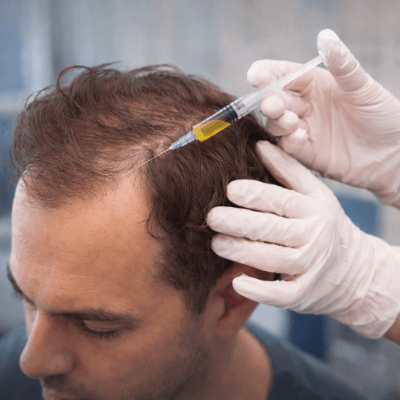
Platelet-Rich Plasma is referred to as PRP. A tiny volume of the patient’s blood is drawn and processed during the procedure in order to concentrate the platelets. After that, the resultant plasma is gently applied to the thinning-affected parts of the scalp. Growth factors included in platelets may promote follicular activity and tissue healing. When viable follicles are still present, PRP is especially taken into consideration for diffuse thinning and early to moderate pattern hair loss.
PRP does more than just give the scalp more hair. Rather, its purpose is to sustain the follicles that already exist. The new hairs that follicles create may become finer and less visible when they weaken or shrink. By stimulating these follicles and enhancing the scalp environment, PRP may eventually enable the development of new strands that are thicker and denser.
The potential to increase hair thickness is one of the primary reasons people think about PRP. At first, new hair may seem fine, particularly if follicles have been impacted by pattern hair loss. PRP may enhance the look of hair density and promote follicular activity. Results, however, differ from person to person.
The quantity of hair on the scalp is simply one aspect of hair quality. Strength, thickness, and general look are also important. PRP may help promote healthier-looking, fuller hair by strengthening weak follicles. It’s crucial to realize that PRP cannot ensure that every new hair will grow noticeably stronger or thicker.
People with early or moderate hair thinning and hair-producing follicles can benefit more from PRP. It may be considered for:
PRP shouldn’t be seen as a quick fix because hair development takes time. Usually, changes take several months to manifest.
While noticeable changes in thickness and density may take many months to manifest, some patients may experience less shedding in the early stages. Treatment regimens often entail numerous sessions spaced several weeks apart, followed by maintenance if the treating physician deems it necessary.
Several factors can influence how well new hair develops after PRP treatment.
Selecting a skilled healthcare professional is crucial for injectable therapies. Instead of employing the same strategy for each patient, Enfield Royal Clinic in Islamabad emphasizes individualized treatment planning. A consultation can assist decide whether PRP is a good option, evaluate the scalp, and determine the likely cause of hair thinning. PRP may also be used in conjunction with other hair-growth therapies, depending on the demands of the individual.
Can PRP therefore enhance the quality of newly grown hair? It might. When viable follicles are present, PRP may help increase hair thickness, density, and overall look by strengthening weaker follicles and the scalp environment. Realistic expectations are crucial for those thinking about PRP in 2026. You can get a professional consultation at Enfield Royal Clinic Islamabad to find out if PRP is a good fit for your hair restoration needs.