Hair transplant surgery is a lifelong lasting hair restoration method, but it is a surgical process, which is why most patients back off from it. Getting to know the process better will help people understand that the surgery we perform at Enfield Royal Clinic in Islamabad is very safe. To explain and have a better understanding, in this detailed guide, we will explain how hair transplant works step by step so you can end your fear and get back your hair and confidence.
Understanding Hair Transplant
It is a hair transplant in Islamabad process in which follicles in good health are taken from the donor part of the scalp, which is usually the back of the head, because this area is prone to hair fall, and then the extracted follicles are implanted into the areas of need.
When those follicles settle, and the surgical site heals after a full 10 to 12 months of recovery, new hair grows at the spot, giving you the most natural and satisfying look.
How Hair Transplant Works Step by Step at RHT
At the Enfield Royal Clinic located in the twin cities of Pakistan, we have a record of performing safe and satisfactory surgery to help people suffering from extreme or complete hair loss. Their process is performed in the following steps.
1. Consultation and Hair Assessment
The surgeon evaluates your pattern of hair loss, scalp condition, donor hair strength, and overall suitability for surgery
This visit sets realistic expectations and confirms how many grafts are needed.
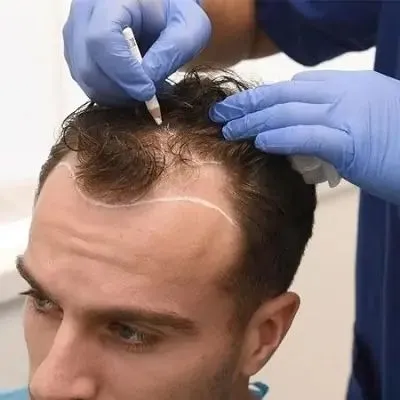
2. Hairline Design and Planning
The surgeon draws your new hairline in front of you, considering your facial structure, age, and future hair loss risk. They plan the number of grafts, their density, and distribution at this stage.
3. Donor Area Preparation
The donor zone, usually the back of the head, is trimmed, cleaned, and sterilized.
This ensures safe extraction and lowers infection risk.
4. Local Anesthesia Administration
An anesthetic is injected into both the donor and recipient areas to block pain.
You remain fully awake, relaxed, and comfortable throughout the procedure.
5. Graft Extraction
The surgeon carefully removes individual follicular units using micro instruments. They protect each follicle during extraction to ensure future growth
6. Graft Inspection and Sorting
The team examines extracted grafts under magnification to assess quality and survival potential. They group the grafts by hair count to control density and achieve natural results
7. Recipient Area Creation
The surgeon creates micro-channels in the bald or thinning areas. They set the angle, depth, and direction to match natural hair growth patterns
8. Graft Implantation
The prepared grafts are placed into the new channels one by one.
This step builds the hairline, density, and overall shape of the final result.
9. Final Review and Dressing
The surgeon checks placement, density, and symmetry.
The doctor cleans the scalp and may apply a light protective dressing
10. Post-Procedure Care Instructions
You receive detailed instructions for washing, medication, sleeping position, and activity limits.
Proper care during healing is essential for strong graft survival and growth.
Types of Techniques Dr. Naveed Experts In
- FUT Hair transplant
- FUE Hair transplant At Enfield Royal Clinic
- DHI Hair Transplant
- Sapphire FUE Hair Transplant
Conclusion
If you, too, are struggling with hair issues and your doctor said that only a hair transplant could work on your situation, then don’t worry. Visit us and have a detailed consultation. We will discuss with you and explain each step in detail as per your situation, so you can have a mental satisfaction first before having the treatment. This allows a person to have a satisfactory experience. Call us now and book your spot today.


